Features
Part of 4 things to weigh up on garden travel memberships
6 honest notes on garden travel memberships
Ways to get more from a garden membership: joining somewhere you do not live, using the archive, and treating the support relationship as the point.
Most people join the garden nearest to them and use it twice. These are alternative approaches, some of which produce far more value from the same money.
What to take away
- Joining a garden you visit on holiday can be better value than joining a local one.
- The digital and archive material is a benefit people forget they are entitled to.
- Household memberships are usually the cheapest way to make the arithmetic work.
- Some institutions share their material openly, which changes what membership is for.
Join where you travel, not where you live
If you visit one region repeatedly, a membership there may be worth more than one at home, particularly where reciprocal terms exclude gardens near your own address. Check whether your travel pattern actually crosses the network before assuming the local option is best.
Use the archive, not just the gate
Institutions increasingly publish substantial material that members forget to use: recorded talks, plant care guides, exhibit documentation and teaching resources. Some go further and share their exhibit content with other organizations.
The United States Botanic Garden invites organizations to request its exhibition materials. Its content has reached over a million visitors a year in Washington. It is free digitally to United States public gardens, non-profit organizations with a registered identification number, government entities, and educational institutions aligned with its mission, on application and under a signed agreement.
Requests go to the Garden from the eligible groups above. The agreement typically covers permitted uses, credit, and resale limits, so ask for the current version first. If you belong to a school, a community group or a small garden organization, that is a route worth knowing about entirely separately from any membership.
Treat the support relationship as the point
At a garden that charges nothing, a membership is a donation with benefits attached. That is a reasonable thing to buy, provided you decide it deliberately. The useful question is not what do I get, but what does this pay for.
Follow one exhibit instead of the whole calendar
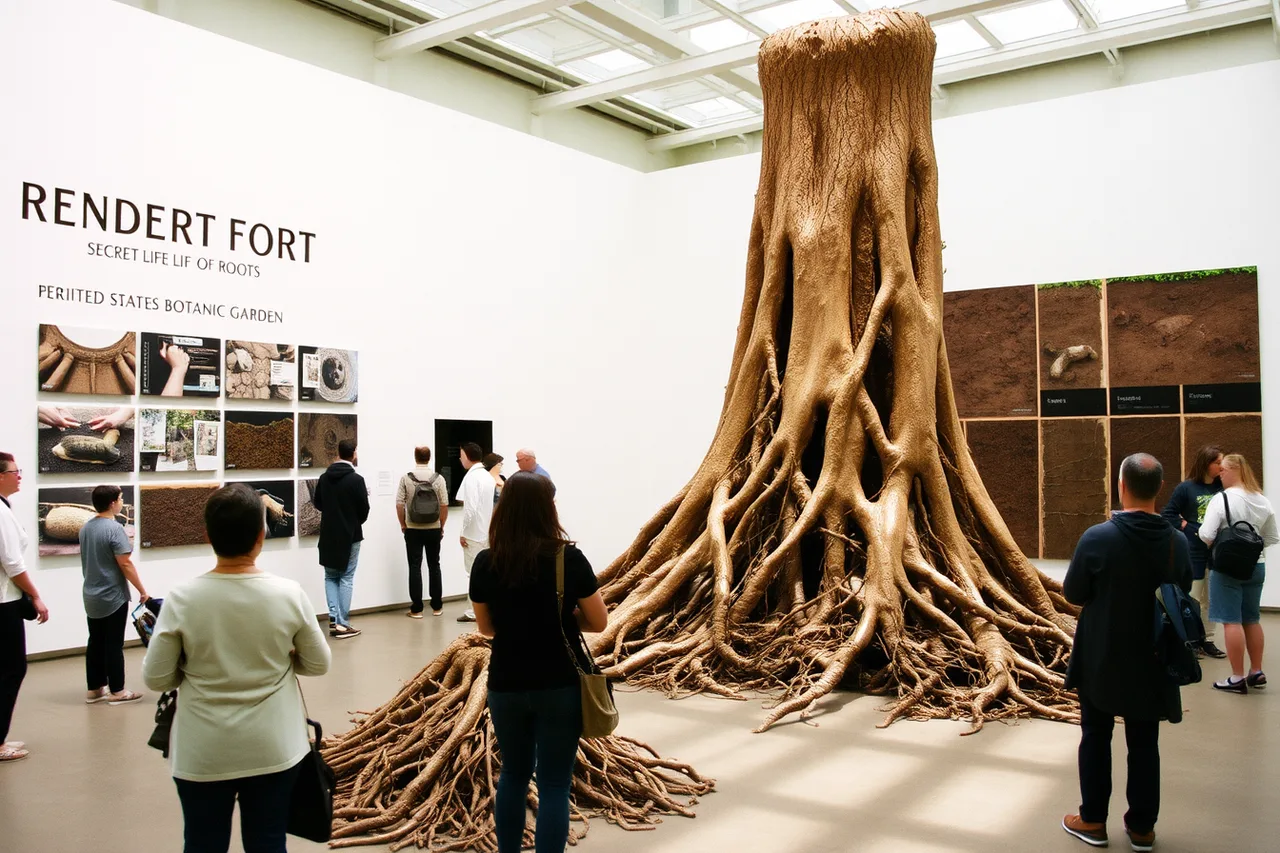
Members who use a membership well pick one subject and return to it. Exhibits reward that. A display at the United States Botanic Garden about the secret life of roots was built around an agricultural ecologist, a sculptor and a photographer.
A household tier of garden travel memberships at a mid-sized US garden typically costs about $75 to $150 a year, against $12 to $25 for a single visit.
It used root representations and soil profile photography to show the disparity between the biomass above and below ground, on the grounds that roots go unnoticed precisely because they are out of sight.
An exhibit like that repays three visits and one talk far better than six unrelated walk-throughs. Pick the current display, attend whatever the institution runs alongside it, and treat the rest of the calendar as optional.
Give one, keep one
Household and gift memberships change the arithmetic. A gift membership for someone who lives near a garden you visit occasionally is a common arrangement that works for both parties.
What memberships cost, and where reciprocity stops
A single adult membership at a mid-sized US garden typically runs $40 to $100 a year. A household tier, which covers two adults and children at most institutions, typically runs $60 to $150. Gift memberships usually cost the same as the household rate. Three visits at a $15 gate price cover a $40 individual membership.
Reciprocal admission is the part people misread. The American Horticultural Society runs the Reciprocal Admissions Program, commonly called AHS. NARM, the North American Reciprocal Museum Association, and ROAM, the Reciprocal Organization of Associated Museums, are the two other schemes a garden may join.
AHS commonly excludes gardens within about 90 miles of your home garden. NARM and ROAM commonly exclude museums and gardens within roughly 15 to 50 miles. Terms change, so confirm the radius for each garden before you join.
An AHS membership typically costs about $45 to $65 a year and carries its own reciprocal list. NARM and ROAM come as a benefit of a museum or garden membership, so their cost is whatever that institution charges.
Our guide to judging a garden membership covers the decision itself, and the alternative itinerary shapes pair well with a membership you intend to use repeatedly.