Reviews
Part of The types of public garden destination that actually reward a long trip
Guided tours of public garden destinations, compared: free audio versus paid
Comparing garden tours fairly: what a guided walk includes, when a free audio route beats a paid one, and the reservation details that decide access.
Two tours of the same garden can differ by an hour, a fee and a completely different level of access. Comparing them means looking past the description to four things: who leads it, where it goes, what it costs, and how it is booked.
What to take away
- Free audio routes cover the standard stops and cost nothing but your own time.
- Guided tours earn their place by reaching areas you cannot walk into alone.
- Reservation rules, not price, are usually the binding constraint.
- Check the language offered before assuming a tour will work for your group.
Start with the free option
Before comparing paid tours, find out what the site already gives away. The audio tour at the United States Botanic Garden runs in English or Spanish. You can stream it on a smartphone or call a phone number and enter a stop number, with controls to rewind, pause or skip.

The published stops cover the Garden Court, the orchid house, the medicinal plants collection, the Mediterranean and world deserts houses, the murals, plant conservation, and outdoor stops including the pollinator garden, the regional garden and the rose garden.
That is a serious route, self-paced, at no charge beyond a normal call. Any paid tour has to beat it.
A concrete paid comparison is the Grand Garden Tour at the Chicago Botanic Garden. It is a 45-minute narrated tram tour. Tickets are $10 for adults, $8 for seniors and $5 for children ages 3 to 12; members ride free. It runs on a published schedule and does not require a reservation.
What a guided tour should add
The clearest justification for a guided tour is access. A good example is the eagle tour at Reelfoot National Wildlife Refuge. It runs about two and a half hours, is free, and takes visitors to remote parts of the refuge including Grassy Island and Long Point that are not on the general visitor route.
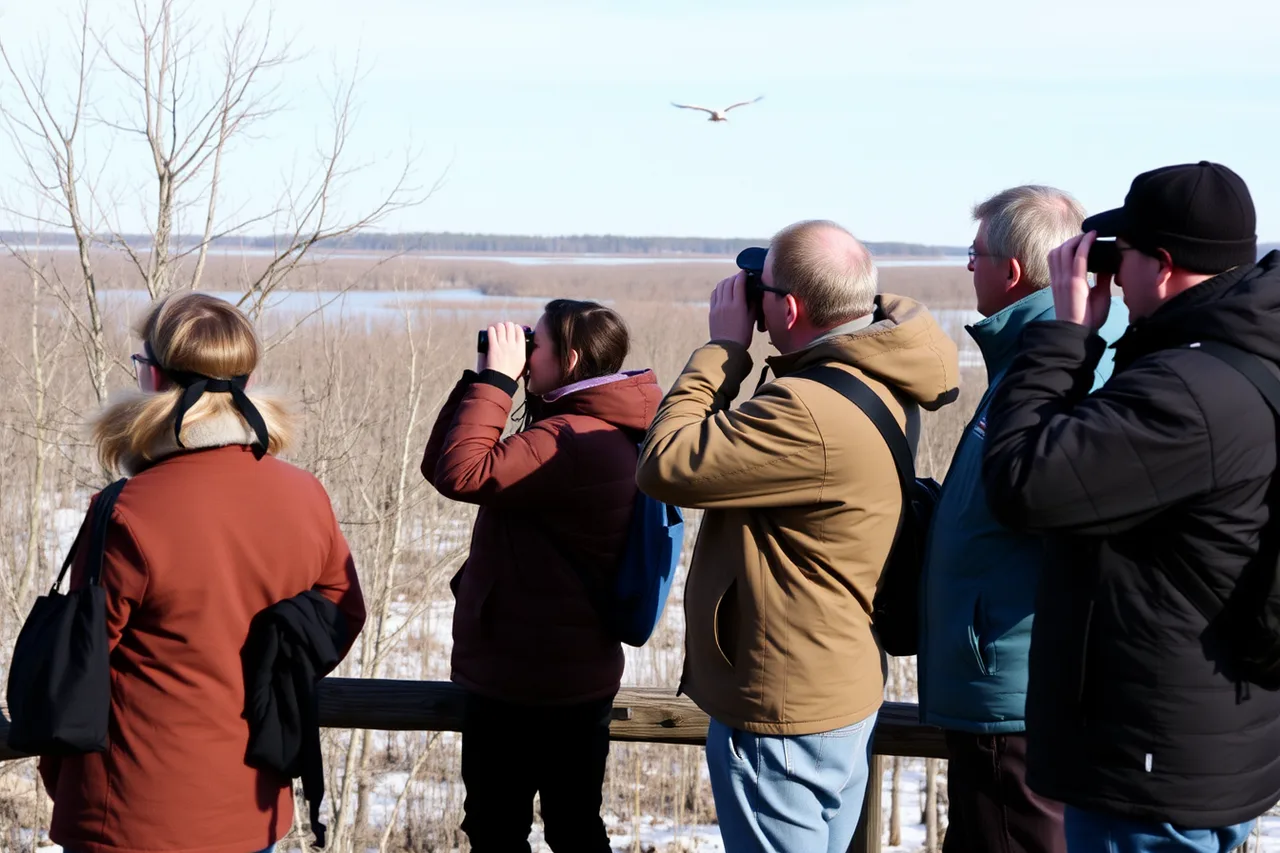
Reservations are required, groups are limited to four or fewer, the tour runs on set weekdays in January and February, and registration opens on a fixed date in December.
Every element of that matters when comparing. Duration, access to restricted areas, group size, running season and booking window are the terms of the product. A tour that omits them is asking you to guess.
The comparison table
| Factor | Question to ask |
|---|---|
| Leader | Staff, trained volunteer, or contractor |
| Route | Does it reach anywhere you could not walk yourself |
| Group size | Capped, and at what number |
| Booking | Reservation required, and when does it open |
| Language | Which languages, and is anything captioned |
| Cost | Included with entry, separate fee, or free |
Where tours go wrong
The common failures are a group too large to hear the guide, a route that duplicates the free audio stops, and a booking window that opened months before you looked. Two of those are avoidable by reading; the third means checking early.
There is a fourth, less obvious failure: a tour that is really a transfer. Some products sold as garden tours are mostly coach time between sites, with forty minutes on the ground at each.
Before you buy, compare the stated duration with the number of stops. Treat anything under ninety minutes per garden as a drive-past, not a visit.
Our guide to choosing a garden in the first place covers what to match a tour against. The collection of ideas worth trying suggests visits that do not need a guide at all.