Features
Part of The types of public garden destination that actually reward a long trip
Spring, summer or autumn: picking the time for public garden destinations
How to pick the time for public garden destinations: what spring, summer and autumn each offer, which named gardens carry each season, and what to plan around.
Season changes public garden destinations more than any other decision, and it is the one people make last. This piece works through what each part of the year actually offers, and why the answer depends far more on region than on the calendar.
What to take away
- Choose a season for what it reliably offers, not for a bloom you hope to catch.
- Regional differences outweigh calendar months across a country this size.
- Spring pays off in the desert Southwest and the Southeast; autumn in New England and the upper Midwest.
- Evening openings are usually summer only and announced a few months ahead.
- Protected and rare species are often the most seasonal thing on site.
Spring: the least predictable season
Spring is the season people want and the hardest to book. Flowering shifts by weeks with winter and varies widely by region, so the useful answer is a region rather than a date. In the desert Southwest, the Sonoran Desert bloom around Phoenix — the specialty of the Desert Botanical Garden — is the main event of March and April. Farther east, spring arrives earlier the farther south you go, and the cherry trees around Washington's Tidal Basin are the best-known marker; the National Park Service publishes a peak-bloom forecast each year that is worth reading before you book flights.
Kenwood Marsh Checkermallow
2 | Sonoma County locations
4 ft | mature height
Late June–September | flowering window
Spring | popular label, wrong timing
The U.S. Fish and Wildlife Service's own writing on spring flowers of the West lists species in California and Nevada, including the endangered Kenwood Marsh checkermallow. Known from only two Sonoma County locations, it grows to around four feet and flowers from late June into September, though framed as a spring story.
Two things follow. Rare species are often the most narrowly seasonal thing a site holds, and the popular label for a season does not tell you when a particular plant will actually be out. Ask the site what is in bud rather than planning around a month.
Summer: long days and evening access
Summer is the season for length, not novelty. Many gardens extend hours on selected dates, announced in advance.
Summer Evening Hours 2026
- 5 p.m.Live music begins
- Third ThursdaysJune, July, August, September
- 8 p.m.All areas close
- One dateMoved for a city event
The United States Botanic Garden published summer evening hours for 2026 for third Thursdays across June, July, August and September. All areas stay open until 8 p.m., with live music from 5 p.m. and food and drink sold on site by local vendors in partnership with the Friends organization.
One date was moved because of a city event, so check the notice again close to the day.
An evening opening is worth planning around. Light is better, temperatures are lower, and the site feels different from the same place at noon.
Autumn, and winter as the quiet alternative
| Season | What it reliably offers |
|---|---|
| Spring | Fresh growth, the most crowded weekends, unpredictable timing |
| Summer | Long days, evening events, hot midday hours |
| Autumn | Seed heads, color, grasses, and the best light of the year |
| Winter | Structure, bark, glasshouses, and near-empty paths |
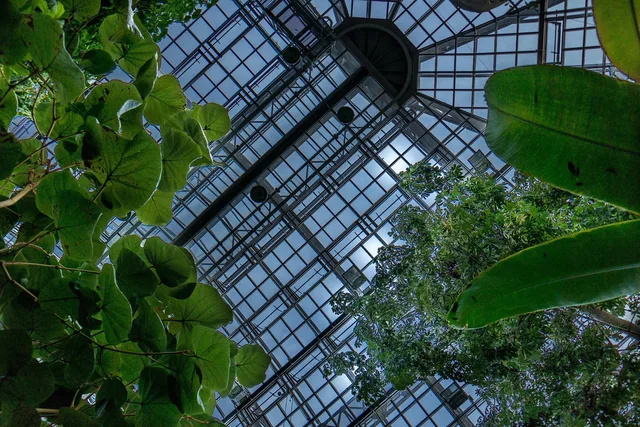
Autumn is underrated at gardens with good grass and perennial plantings. Winter is the best season for glasshouse collections, because the contrast with outside is the whole point and because you will have the rooms largely to yourself. For the grass-and-perennial style, the naturalistic plantings of the Lurie Garden in Chicago's Millennium Park and the tree collection of the Arnold Arboretum in Boston both hold their interest into October and November. For glasshouses, Longwood Gardens in Pennsylvania, Phipps Conservatory in Pittsburgh and the Garfield Park Conservatory in Chicago keep their rooms in full display through the coldest months.
Both seasons also change the practical side of the day. Autumn gives you low light for longer, which suits photography and makes a slow visit comfortable. Winter shortens the usable day sharply, so an early arrival matters more than it does in July, and outdoor sections may close before the indoor ones.
Planning the date
Fix the season first, then the region, then the site, then the date. Our overview of approaches to choosing a public garden destination helps with the third step, and the ideas worth trying are mostly season-independent, which makes them a safe fallback when timing does not work out.