Guides
How to find lesser-known public gardens near interstate exits on a road trip
Lesser-known public gardens near interstate exits, found through state and county listings, with a real Interstate 40 example and a two-day stop plan.
What to take away
- Lesser-known garden stops surface on state tourism and county extension pages, not in national garden guides.
- University extension gardens are the easiest findin Tennessee, the three sites of the State Botanical Garden sit in Jackson, Crossville and Knoxville, all on Interstate 40.
- Budget one garden for every 90 minutes of driving, and cap a two-day run at four stops.
- Travel time between stops decides the day, so a 15-minute detour that costs 40 minutes round trip is not a stop.
- Call the garden the morning you leave, because seasonal hours close earlier than listings say.
How to find the gardens along your route
Lesser-known public gardens near interstate exits rarely appear in national round-ups. Search in this order:
- The state botanical garden or land-grant university.Many states run demonstration and trial gardens through a public university's agricultural research centres, and these often sit in towns on the main interstate.
- County extension offices.Extension agents and Master Gardener volunteers keep demonstration beds that are open to the public. The office for each county you cross will list them.
- The state department of agriculture.Some keep a garden list of their own. Hawai'i's Department of Agriculture & Biosecurity, for example, has a Hawai'i Botanical Gardens page that lists gardens island by island, including Lyon Arboretum at the University of Hawai'i at Manoa.
- A state-by-state directory.Wikipedia's List of botanical gardens and arboretums in the United States is organised by state and is intended to include all significant botanical gardens and arboretums in the country. Read the entries for the towns your interstate passes through.
Then open each garden's own page and confirm the opening hours and whether entry is free.
A real example: Interstate 40 across Tennessee
Tennessee shows how the method works. The UT Gardens, which the state designated as its official botanical garden in 2013, has three sites, and Jackson, Crossville and Knoxville are all cities on Interstate 40:
- UT Gardens, Jacksonis at the West Tennessee AgResearch and Education Center. The gardens are laid out around the office building area, and visitors are welcome during daylight hours.
- UT Gardens, Crossvilleis at the UT Plateau AgResearch and Education Center. It is open during daylight hours all year and is free to the public. It is run with UT Extension Cumberland County and the Cumberland County Master Gardeners, which is exactly the county extension link described above. A visitors guide and map sit in the birdhouse near the deck, and the brochure explains each garden theme and the horticulture trials.
- UT Gardens, Knoxvilleis on the UT Institute of Agriculture campus. It is an outdoor learning laboratory, open year-round and free to the public.
None of the three is a headline garden, the Crossville and Knoxville sites are free, and each fits the 90-minute walk this plan assumes. Before you set the waypoint, check the exit and the turn on your map app, because each garden page gives an address rather than an exit number.
What this route assumes
This is a two-day drive between two places you already need to reach. You have a car, a passenger who can read a map, and no timed-entry bookings. Every garden here sits within 15 minutes of an exit and takes under 90 minutes to walk.
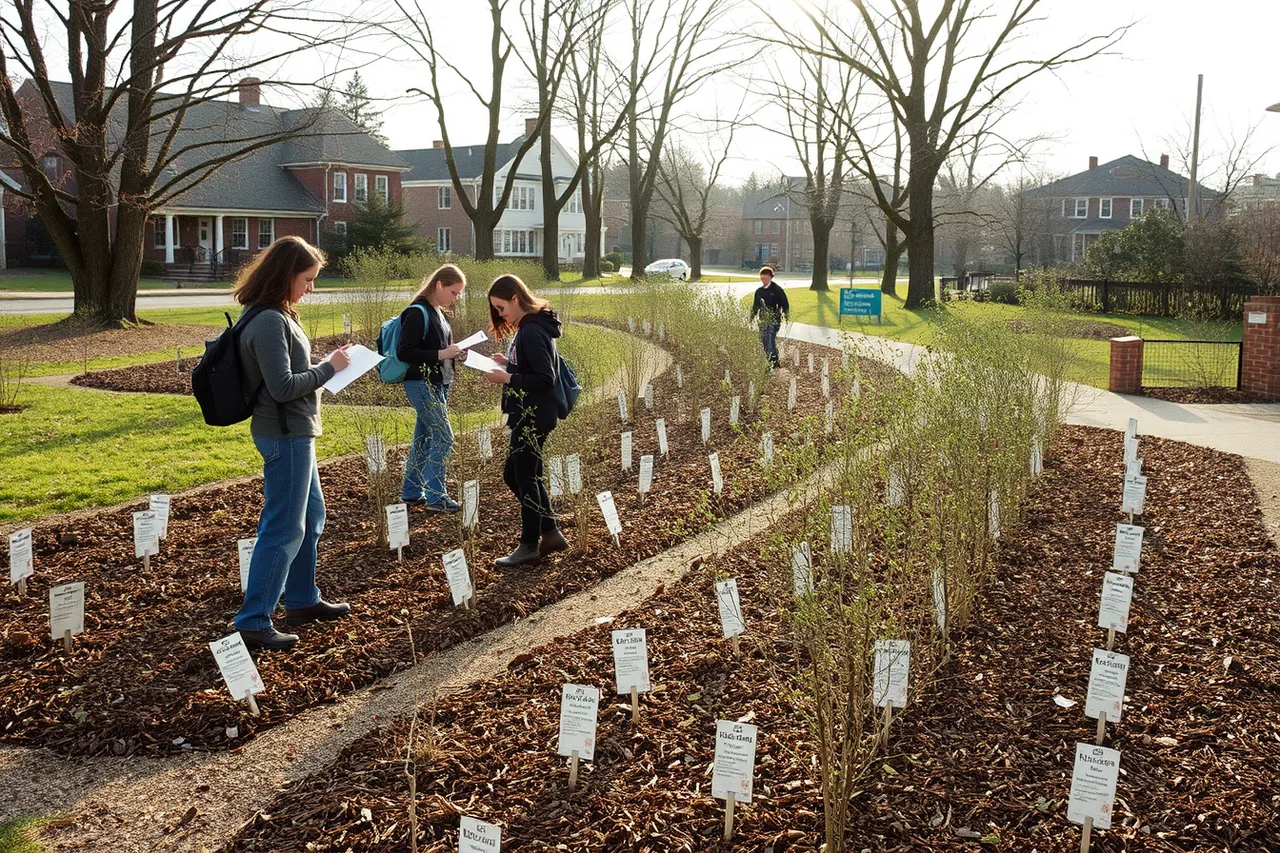
You are not chasing headline gardens. The targets are the college trial plot, the county fairground beds, the municipal conservatory, and the arboretum a parks department keeps on the edge of town. The word matters: an arboretum is a collection of woody plants grown for study and display, which is why so many small ones sit with universities.
If you would rather build a longer garden-centered trip, work it out with our five-step garden itinerary method before you leave home.
The first day, hour by hour
Leave before 8 a.m., while the light is low and the first stop is quiet. The plan below is a template: put the gardens you found on your own route into each leg.
Drive times between stops
- 25minutesStop 1 to 2
- 1hourStop 2 to 3
- 2hoursStop 3 to 4
- 20minutesStop 4 to lodging
Day one stop schedule
- Before 8 a.m.Leave, first stop quiet
- 7-730 Check garden page and phone
- Leg 1Trial garden, exit 220, 50 min
- Leg 2Fairgrounds beds, exit 191, 40 min
- Leg 3Municipal conservatory, 75 min
- Leg 4Park arboretum, exit 54, 60 min
- Check the garden's own page and phone line between 7 and 7:30.
- Set the next stop as a waypoint before you merge, so a missed turn is not a 20-minute recovery.
- Walk the collection, not the whole property, and photograph labels you want to look up later.
- Leave at the time you wrote down, not when you feel finished.
Exit numbers on most interstates count from a state line or a terminus, so the same number can appear twice in one day of driving. The FHWA interstate FAQ explains the numbering and saves you a wrong turn.
| Leg | Stop | Time on site | Drive to next stop |
|---|---|---|---|
| 1 | University trial garden, exit 220 | 50 minutes | 25 minutes |
| 2 | County fairgrounds display beds, exit 191 | 40 minutes | 1 hour 10 minutes |
| 3 | Municipal conservatory, downtown exit | 75 minutes | 2 hours 25 minutes |
| 4 | Park district arboretum, exit 54 | 60 minutes | 20 minutes to lodging |
If anyone in the car has mobility needs, our accessible garden-trip checklist covers what to confirm about paths, restrooms and gate widths before you commit to a site.
Leg 2 is the one to drop. The beds repeat plants from the trial garden, and the 1 hour 10 minutes that follows is the longest empty stretch of the day.
The second day
Day two runs shorter: two stops, the first within 20 minutes of where you slept. Aim to be walking by 9 a.m. and done by mid-afternoon.
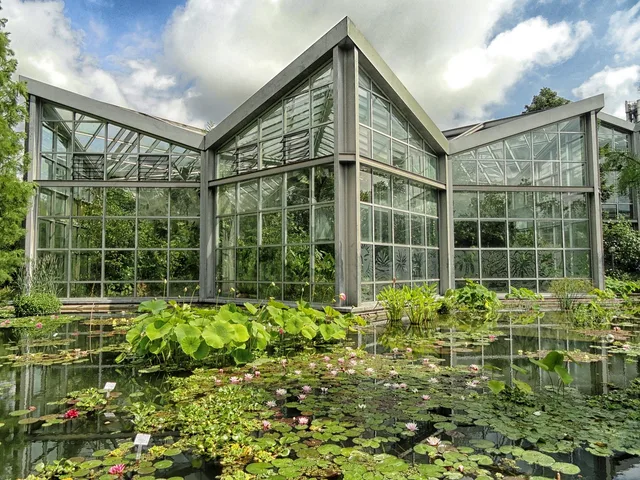
The morning stop should be the conservatory or glasshouse, because indoor collections hold up in rain and heat. Allow 60 to 75 minutes. The afternoon stop is a campus or park arboretum, 45 to 60 minutes on site, with 35 minutes of driving between them.
If the second day is a workday, take one stop and give it 90 minutes. Arriving before the gates open leaves the paths to you.
What to cut when time is short
Cut in this order.
- The fairgrounds beds. Lowest return, longest approach.
- The fourth stop. Three gardens in two days is a full trip.
- The second day's afternoon arboretum, if conditions are poor.
Never cut the first stop of day one. It sets the pace and often holds the best labels. Our two-day garden itinerary guide explains why the fourth stop is always the first casualty.
Getting between the stops
Driving time, not distance, sets the schedule. A 30-mile gap through a city takes longer than 60 miles of rural interstate, so estimate in minutes and check roadwork the night before.
Travel times between stops run 25 minutes, 1 hour 10 minutes, 2 hours 25 minutes, then 20 minutes to lodging. On the long middle leg, a passenger can read the next garden's hours aloud while the driver watches for the exit.
Write each stop's departure time before you arrive, and put any timed-ticket garden first in the day.